
App Developer
Michael William Brescia is an app developer and tech enthusiast in both mobile and web applications. This site is a hub for sharing insights and information on software development, technology, and what’s trending in app innovation.
Michael W. Brescia’s Background
Born in the 1970s, Michael Brescia came of age just as computers were starting to enter homes. Even at a young age, he was captivated not only the gaming aspect, but also by discovering how these machines worked, how they evolved, and how software could be created and manipulated. He spent countless hours dismantling old computers, experimenting with early programming languages and exploring the mechanics behind the technology. This early curiosity laid the foundation for a lifelong passion, which eventually grew into a full-fledged career in software engineering and app development.
Brescia earned his Bachelors Degree in Computer Science from New York University, where he specialized in mobile computing and human-computer interaction. Later, he completed a Masters in Software Engineering, focusing on cloud-based applications and scalable software architecture.
Career Highlights
Over the past decade, Michael W. Brescia has built a versatile portfolio spanning productivity tools, educational platforms, immersive experiences, and mindfulness-focused apps. He currently works as a lead developer specializing in cross-platform solutions, as well as contributing to open-source projects focused on secure API design and mobile UI frameworks.
His work blends technology with usability, accessibility, performance, and elegant design. He is passionate about mentoring junior developers and sharing knowledge with the wider tech community.
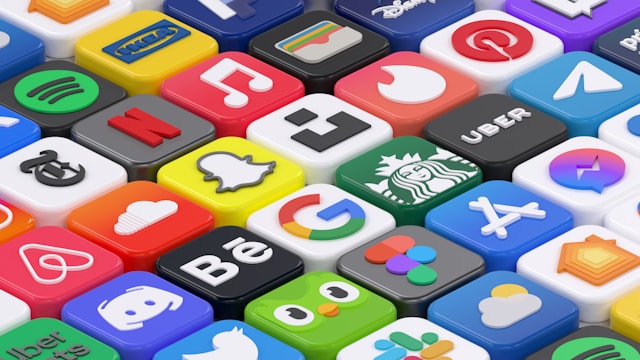
The Mobile Revolution
Before the widespread adoption of modern home computing, dial-up modems began to change how people accessed information, but the process was far from instant. Connections were slow, access was limited, and much of the world’s knowledge had not yet been digitized. Even when information was available online, it often required cross-checking with books, newspapers, or other trusted sources to verify accuracy, reinforcing the idea that technology could assist research, but not replace careful validation and critical thinking.
Today, mobile apps have fundamentally transformed this model, putting vast stores of knowledge directly into the hands of users, instantaneously. Whether it’s news updates, educational resources, or real-time data, apps provide instant access that is both personalized and interactive. With a few taps, users can retrieve information that previously required hours of research, changing the way we consume, share, and act on knowledge.
Personalized Experiences Through Intelligent Design
One of the most significant shifts in app development is the ability to tailor information to individual users. Modern applications leverage data analytics, machine learning, and behavioral insights to deliver content that aligns with a user’s preferences, habits, and location.
News apps, for example, can prioritize topics a reader is interested in, while educational platforms can adapt lessons based on performance. This level of personalization ensures that users receive relevant information efficiently, reducing noise and making learning and decision-making faster and more effective.
Real-Time Updates and Instant Access
App development has also introduced a new standard for timeliness. Social media, financial tools, and weather platforms provide updates in real time, allowing users to act on the latest information as it happens.
Push notifications and live feeds keep people informed about breaking news, stock movements, or emergency alerts, transforming passive information consumption into an active, interactive experience. This immediacy not only changes user expectations but also influences how organizations and governments communicate with the public.
Enhanced Interactivity and Multimedia Integration
Videos, podcasts, interactive graphics, and augmented reality features enables app users to explore complex topics in ways that static sources cannot. For example, educational apps can simulate scientific experiments or historical events, allowing learners to engage with information in a hands-on, immersive manner. This interactivity makes information more memorable and accessible, appealing to diverse learning styles and expanding the potential for knowledge acquisition.

Bridging Global Information Gaps
App development has also democratized access to information on a global scale. People in remote areas, who previously relied on limited local resources, can now access educational materials, professional training, or health guidance through mobile devices.
Apps break down barriers of geography and infrastructure, making it easier for users worldwide to stay informed, acquire new skills, and participate in global conversations. This accessibility not only empowers individuals but also fosters more informed communities and societies.
Shaping the Future of Information Access
As app development continues to evolve, the ways we access information will only become more seamless, intelligent, and interactive. Emerging technologies such as artificial intelligence, machine learning, and augmented reality are enhancing personalization and engagement, while cross-platform integration ensures that information is available wherever and whenever it’s needed. For developers, the challenge lies in creating applications that are intuitive, ethical, and secure, balancing user needs with responsible data use.
App development is not just changing how we access information – it is transforming how we interact with, interpret, and apply knowledge in our daily lives. Every app is a chance to solve problems, connect people, and improve daily life.
Explore Michael’s Tech Platform
Technology moves fast. New frameworks, libraries, and platforms appear almost daily, and staying current is a challenge. Follow Michael’s blog to stay up to date on the latest trends in mobile and web app development. Here, he shares insights on app design and user experience best practices, as well as deep dives into programming techniques and frameworks. Find articles that discuss the broader tech industry, exploring emerging innovations and how they are shaping the future of software development.